Fly Fishing Directory
Fly Fishing Equipment
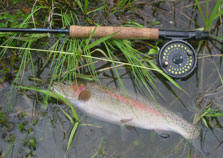 Choosing the correct fly fishing equipment is not difficult once you know what type of fishing you will be doing. Are you trying to catch salmon off the ocean coast or smaller 12-inch trout from a mountain stream in Montana? Each condition will generally require a different size rod, reel, and line to maximize your ability (and enjoyment) in catching fish.
Rods, lines, and reels are all matched by "weight" to more accurately and easily present your fly and give you the necessary casting distance. It all starts with the line weight for your particular type of fishing. Rods are designed to cast or a specific line weight while reels are designed to hold specific weight lines. Smaller weight combinations (2 to 4 weight) are generally used to catch small fish. Medium size combos (5 or 6 weight) are good for fishing rivers and lakes where you may catch fish up to 4 or 5 pounds. Larger weights are good for those big lunkers.
You will also want to consider items like waders and wading boots. These will undoubtedly make your experience better but more importantly, safer. Vests are used to carry all your gear. And there are miscellaneous accessories like nets, sunglasses, and other tools that will also help make your life easier when out on the water fly fishing. I won’t kid you, it will take some money to purchase the equipment, but you shouldn’t have to take out a second mortgage to get a good quality rod, reel and line. Just make sure you purchase the correct weight for your type or fishing and you’ll be set.
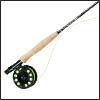 Selecting a rod is not difficult. Though there are literally thousands of choices, there are three things you will need to know: the rod “weight” , the rod length, and the action of the rod.
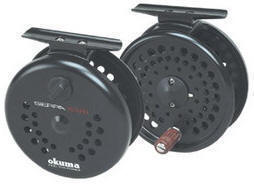 The main purpose of your reel is to hold your fly line. Pretty simple right? But your reel does a lot more than that. It keeps pressure on the fish during a "run" and eases retrieval.
Again, you want to size your reel with the line and rod weight. This will ensure the correct balance of your rod.
The main purpose of your reel is to hold your fly line. Pretty simple right? But your reel does a lot more than that. It keeps pressure on the fish during a "run" and eases retrieval.
Again, you want to size your reel with the line and rod weight. This will ensure the correct balance of your rod.
Believe it or not, your fly line is the most important part of your gear. A good quality line will cast well on both an expensive or cheap rod. So don't skimp on the line. If you need to save money, by a less expensive rod or reel, but make sure you buy a good quality line.
Leader and tippet are a strong, durable, transparent material between the end of the fly line and your fly and are essential for catching fish. Leader and tippet allow for a smooth, invisible presentation of your fly, yet are strong enough to bring in that large fish you have been trying to catch. Using the correct leader and tippet is just as important as using the correct fly.
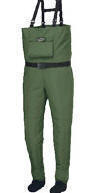 Your rod, reel and line and all essential equipment for fly fishing. Waders are not essential but they come darn near to it. Waders not only keep you dry from the water, but keep you warm from the elements above water as well. Fishing is an outdoor activity and the weather can change dramatically. Waders protect you from the wind, rain, snow, and anything else mother nature can throw at you.
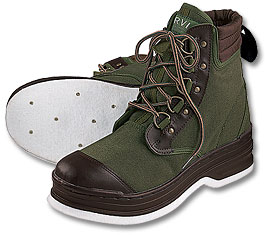 Wading boots are an important safety item when wading streams or
other moving water. They usually come with some sort of
non-skid surface on the sole like felt which give you better
traction on slippery rocks.
Wading boots are an important safety item when wading streams or
other moving water. They usually come with some sort of
non-skid surface on the sole like felt which give you better
traction on slippery rocks.
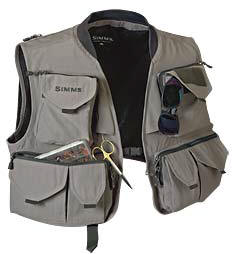 When you venture out for a day of fishing, you will want to make sure you have all the necessary equipment with you. At a minimum you’ll want a variety of flies, extra leaders, several spools of different size tippet, fly dressing or floatant,
a knife maybe, and most importantly, something to eat. Fly fishing
vests have been developed to carry all your gea
When you venture out for a day of fishing, you will want to make sure you have all the necessary equipment with you. At a minimum you’ll want a variety of flies, extra leaders, several spools of different size tippet, fly dressing or floatant,
a knife maybe, and most importantly, something to eat. Fly fishing
vests have been developed to carry all your gea
Other items like polarized sunglasses, hats, nets, and flyboxes can make you day much more enjoyable.
advertisers